Telegraphically
- This year’s recipients of the MENDELU Rector’s Awards include Thomas Jung for his research into forest tree diseases and Valentino Cristini, who combines wood research with practical tree care. Doctoral student Kateřina Patloková was also recognised for her research focusing on aquaponics, hydroponics and the recycling of nutrients and secondary raw materials. Andrea Roztočilová received an award for her contribution to civil society through her longstanding support for people with visual impairments. She also draws on this experience at the Poradna potraviny MENDELU, helping to prepare educational materials on nutrition and food shopping for blind people.
- Simona Rodopská from MENDELU’s Faculty of AgriSciences won first place in the master’s thesis category of the Science for the Earth competition. Her thesis explored the use of plasma activated water to protect potato plants against a bacterial disease as a potentially more environmentally friendly alternative to synthetic plant protection products. Trials on plants showed increased photosynthetic activity, but its potential for crop protection requires further investigation. She is continuing this research during her doctoral studies, now focusing on medicinal, aromatic and culinary plants.
- Thanks to cooperation with MENDELU, Mongolia’s first four forest educators completed a forest pedagogy course in the Czech Republic. In September, they joined experienced colleagues from the university to deliver seven educational programmes in Mongolian forests for more than 200 participants. Through games, children and adults learnt about the importance of forests, forestry and landscape recovery after fires. With the experience and educational resources they have gained, the new forest educators can now prepare further programmes independently.
- The GRAB Autumn School 2026, taking place in Brno from 23 October to 5 November 2026, will bring together students and experts from Europe and Latin America. The programme will focus on agroecology, agroforestry, biodiversity conservation and low-carbon approaches to regional development. It will include field trips, laboratory sessions and activities exploring ways to reduce and offset the carbon footprint of international cooperation. Applications are open until 30 September 2026.
- The European Sustainable Development Week (ESDW) takes place annually from 20 to 26 September. However, events registered as part of ESDW can take place over a wider period, from 18 September to 8 October 2026.
- On 9 September, the University of Pardubice hosted the third meeting of the Czech Rectors Conference Working Group on Sustainability, coordinated by MENDELU. Representatives of Czech universities discussed current issues related to sustainability management, reporting and climate change adaptation.
- Researchers from the Faculty of Forestry and Wood Technology investigated the use of flowering strips in forest and ornamental tree nurseries. The study showed that the strips support natural enemies of pests while also helping to reduce damage to young pine trees. They could therefore offer a way to reduce the use of synthetic pesticides in nursery production and make greater use of natural processes. As the research was carried out in a commercial nursery, the findings can also be applied in everyday practice.
- This year's drought has had a significant impact on soil conditions and a number of agricultural crops. Experts from Faculty of AgriSciences point out that agriculture will need to gradually adapt to warmer and drier conditions. More resilient crop varieties and species, better management of soil moisture, changes in cultivation practices and more efficient irrigation can all help. Farmers are already putting many of these measures into practice.
- Researchers from the Faculty of Forestry and Wood Technology took part in an international study investigating the decline of European hornbeam in urban environments. They found that intense sunlight can damage tree bark and make it more susceptible to fungal infection. As extreme temperatures become more frequent, even tree species considered relatively resilient to climate change may face similar problems. The study also highlights the need to adapt the management of urban greenery to changing climatic conditions.
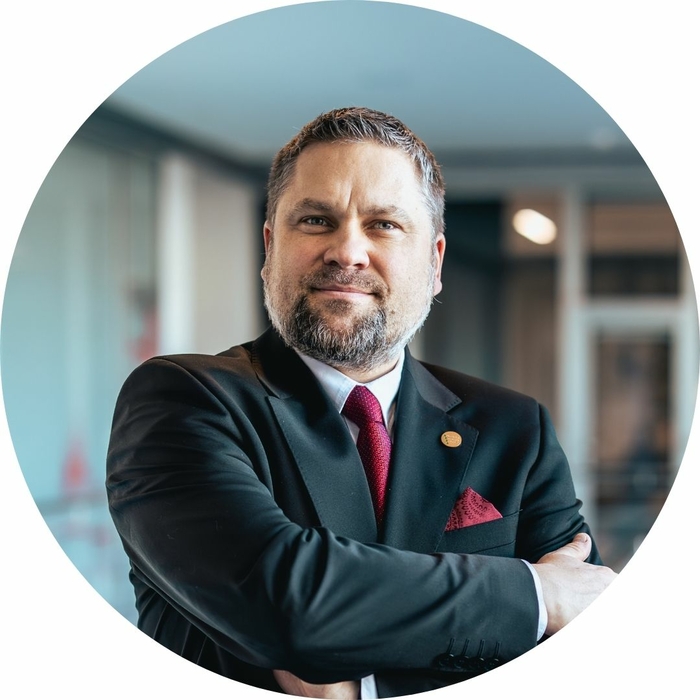
"Our mission is to create a responsible and sustainable environment."
Martin Klimánek, rector
Five Pillars of Sustainability at Mendel University in Brno
Management strategy
Mendel University is committed to transparent and sustainable governance, aligning with the European Green Deal, the UN Agenda 2030, and the strategic goals of the Czech Republic. Efficient resource management, digitalization, and reducing the carbon footprint are key to our long-term development. The MENDELU Strategic Plan 2025–2030 integrates sustainability across all aspects of university operations – from campus management to education and innovation. We are a modern university that not only responds to climate challenges but actively contributes to their solutions.

Educational activities
Sustainability is becoming an increasingly important topic, and education should play a key role in promoting a sustainable future. Today, all sectors of society face significant pressure to adopt responsible practices and contribute to reducing their environmental impact. MENDELU is no exception and strives to be a pioneer in the field of sustainability.
Research Development and Innovations (RDI)
Mendel University supports innovative research and creative activities that contribute to sustainable development and responsible management of natural resources. Our scientific efforts focus on environmentally friendly technologies, sustainable agriculture, and the circular economy. Knowledge transfer also plays a key role – we bridge academic insights with real-world applications, helping to implement sustainable innovations in businesses and the public sector. Through collaboration with partners at both local and international levels, we contribute to addressing global challenges.

University operations and administration
As part of our sustainability strategy, we emphasize responsible campus operations and management. We invest in photovoltaic systems to reduce our reliance on non-renewable energy sources and optimize water management to prevent unnecessary waste. We carefully sort waste and explore ways to repurpose it. At the same time, we focus on developing green spaces on campus, which contribute to a better microclimate and overall environmental quality. For us, sustainability is not just a word – it is an integral part of our daily operations.

Social responsibility and third role of the university
Shaping public opinion, responding to societal challenges, fostering partnerships and collaboration, and adopting a responsible approach. In the face of an escalating climate crisis and growing social inequality, sustainability and social responsibility have become critical issues. At the heart of these concepts lies the understanding that we must act now to ensure the well-being of both present and future generations.
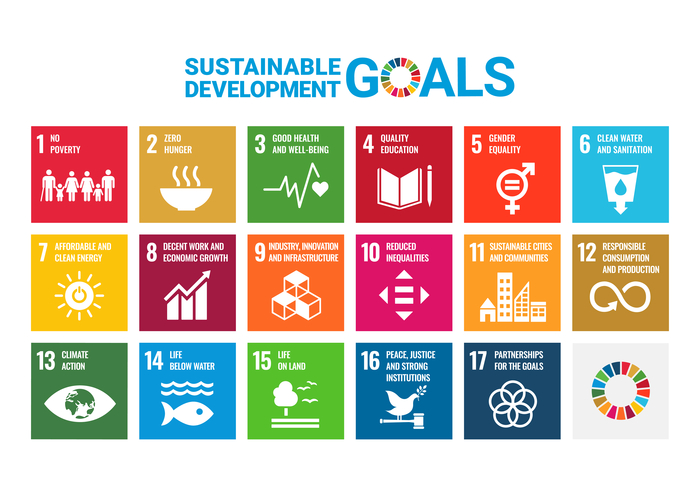
Priority goals of MENDELU (in relation to the UN SDGs)
The inspiration for the formal definition of sustainability at MENDELU is based on the 17 Sustainable Development Goals (SDGs), which outline a development agenda through 2030. The broad focus of MENDELU in education, science, and research provides a strong foundation for integrating the principles of individual UN goals into the university’s internal environment. Participation in selected international university rankings and support for an additional SDG-related ranking are among the proposed measures in the implementation plan of the Strategic Plan. Mendel University in Brno prioritizes the following six Sustainable Development Goals, while its activities also contribute to other SDGs.
We commit to the UN goals